The fifty-some nautical miles from Guadeloupe to Antigua turn out to be easier than expected. After days of light winds the sea is fairly calm, and with the breeze just forward of the beam we cruise comfortably, making good speed.
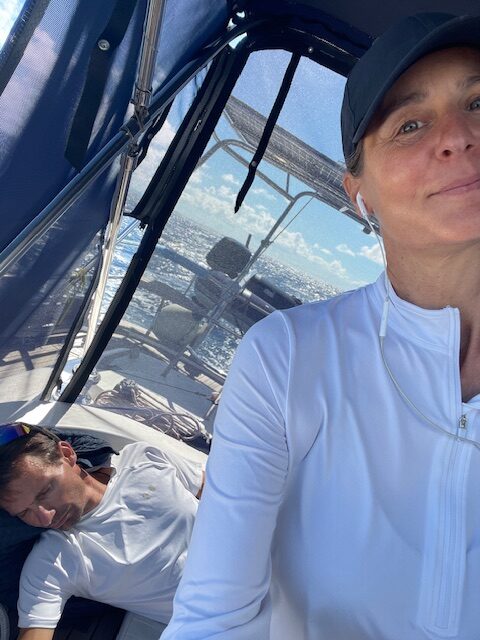
Seven hours later we drop anchor at Jolly Harbour — just in time to still make it to the authorities and clear into the country.
At customs we meet Dagi and Robert, a German couple aboard Globi. We’ve seen them a few times along the way and tracked them on AIS all day, in a one-sided race to catch up. As we now learn, they are lifelong and excellent sailors — clearly out of our league — and we concede laughingly.
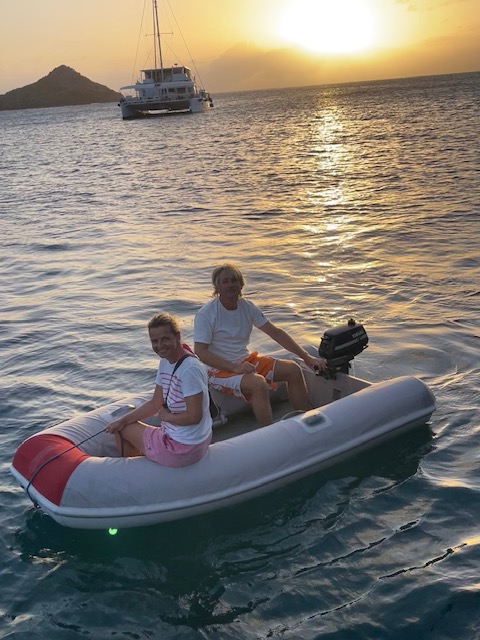
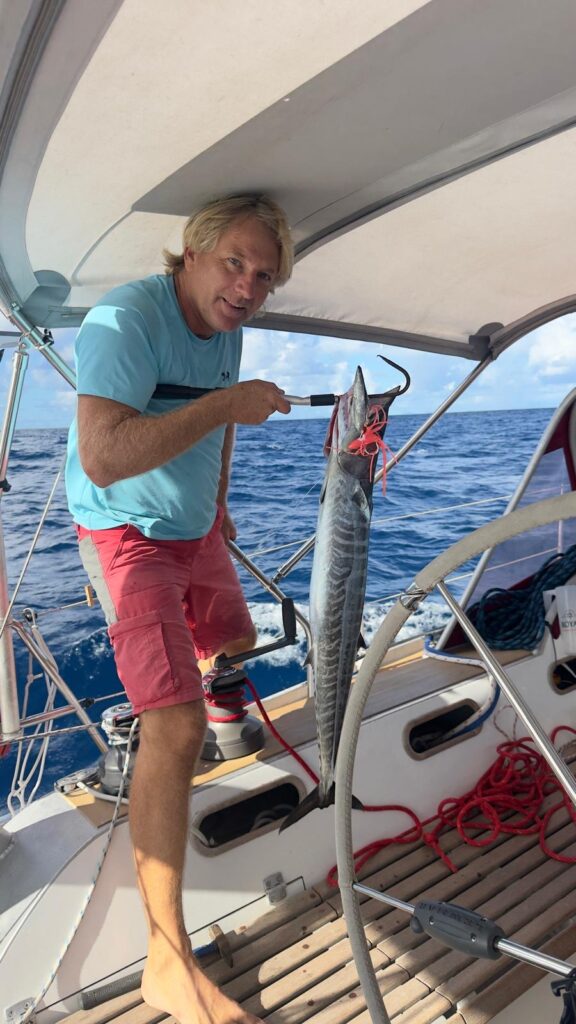
They are wonderful company. Drinks at the marina bar turn into long conversations about sailing histories and future plans. The next day we visit again and enjoy a fantastic fish curry aboard Globi. It turns out they are avid fishermen, with an almost absurd bounty in their freezer: tuna, mahi-mahi, wahoo — and that night, marlin. Delicious. We leave inspired, both by their fishing success and by the many clever improvements they’ve made to their boat.
Now just the two of us again, Karin and I quickly fall into a slower rhythm. The pace changes almost automatically. She has some catching up to do on her training program; for me it’s time to ramp up the work awaiting me back home.
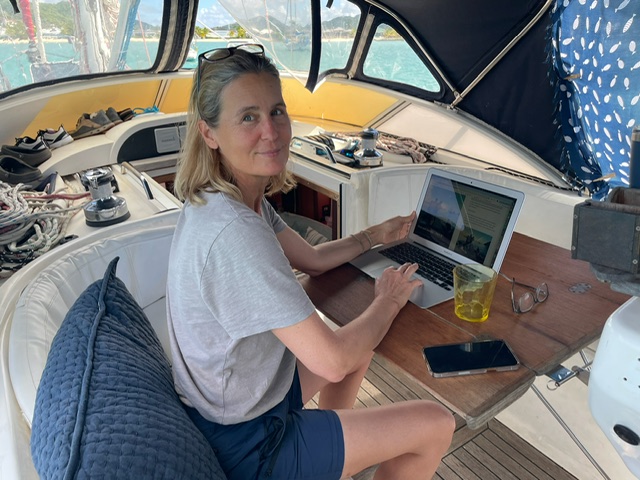
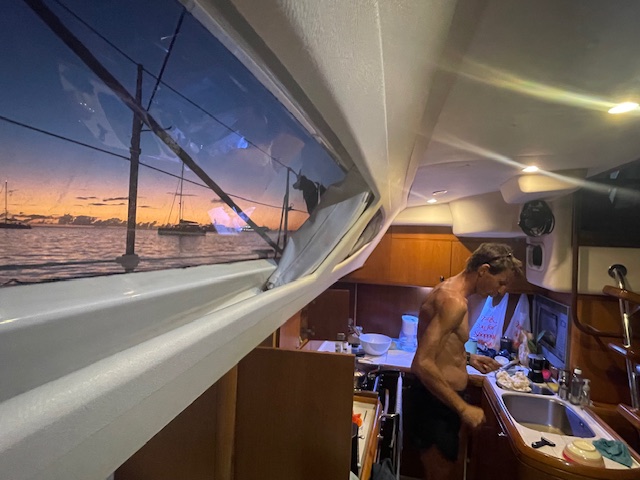
Over the next days we spend a lot of time simply being — anchored in quiet coves, swimming and snorkeling, doing a bit of work, and otherwise settling into the comforts of our routine.
After only a couple of days we leave Antigua and head north to Barbuda. We explored Antiguan waters extensively last year with the kids, so its unexplored sister island calls to us more strongly this time.
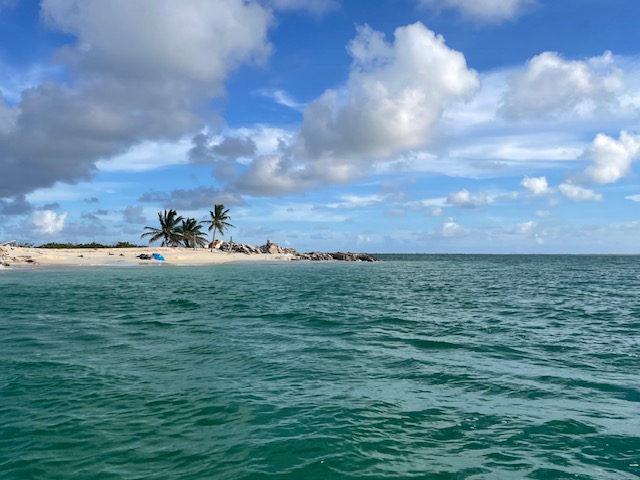
Barbuda couldn’t be more different. It’s not volcanic, but formed over millions of years by coral. The island is flat and dry — no mountains means no gradient rain — covered in shrubs instead of rainforest. In return you get endless white beaches, some with a faint pink hue, and a coastline protected by coral reefs.
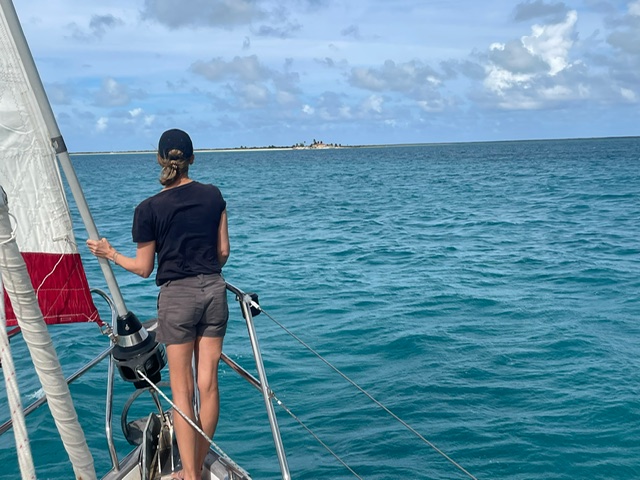
The sail north is about thirty nautical miles and crowned by a pod of three dolphins that patrol the waters south of Barbuda. They join us for a few minutes, playing in the bow wave. Karin watches from the foredeck, happy as a clam but, unfortunately, without a camera.
We spend four nights in Barbuda, in three very different anchorages.
The first lies behind a dreamy white beach, adjacent to a small development of luxury villas for the ultra-rich seeking absolute privacy. Supposedly Robert De Niro is involved. We snorkel, then take a long walk along the beach during golden hour.
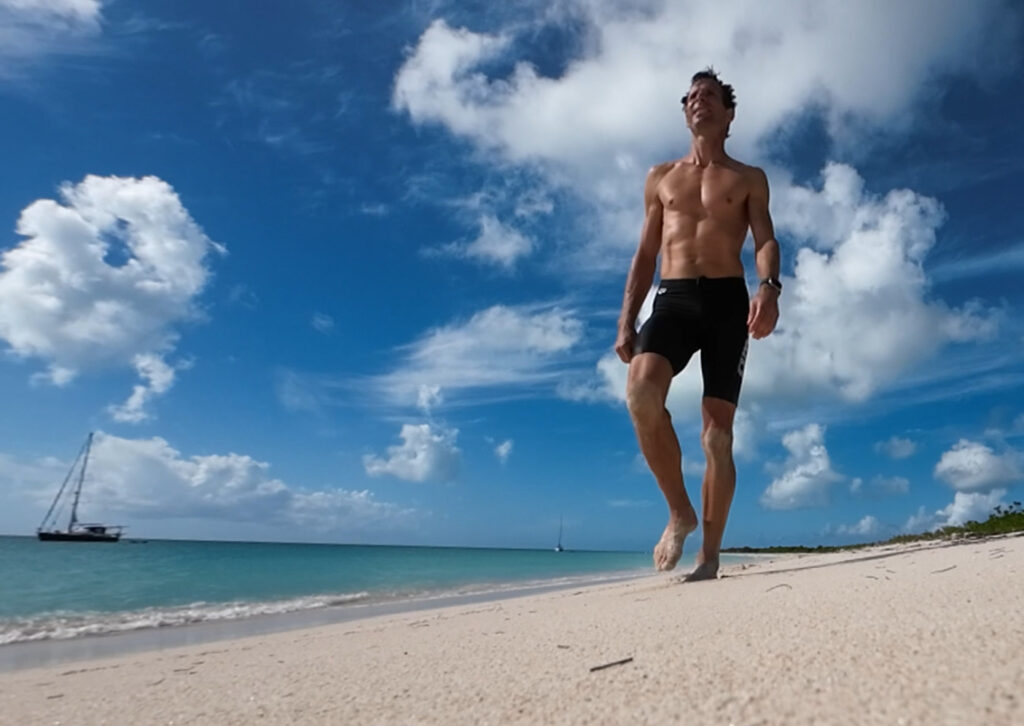
Our second anchorage becomes home for two nights. It’s tucked behind a large reef and a bit tricky to enter. Once inside, we have the entire bay to ourselves. It takes a moment to relax — are we really okay here? — but then we settle in. Skinny-dipping, exploring the reefs, dinghying ashore, walking long stretches of untouched beach.
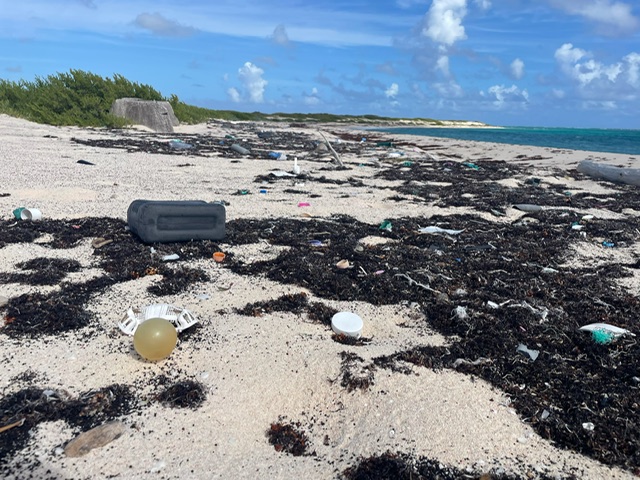
The east coast tells a different story. Facing the prevailing winds and three thousand miles of open Atlantic, it’s wild and windswept — and littered with debris. Plastic bottles, fishing nets, jerrycans, shoes, toys. Fifty years of mass-produced plastic, washed up on an otherwise stunning beach. It’s hard to ignore.
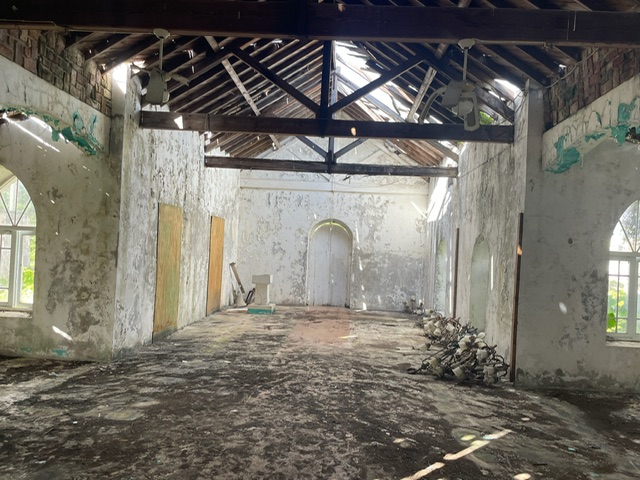
Our final stop is Low Bay, west of Barbuda’s massive inland lagoon. Barbuda was hit very hard in 2017 by hurricane Irma. 94% of the man-made infrastructure was destroyed, the whole population had to be evacuated, and to this day scars of Irma are clearly visible.
Our pilot book is outdated, and we’re surprised to find that Irma also tore a wide opening into what used to be a protective sand spit, allowing salt water, big swells, and new predators in. The lagoon once teemed with life; now even sharks regularly enter, upsetting the old balance. Still, this place is breathtaking. The beach stretches on for miles, tinted pink.
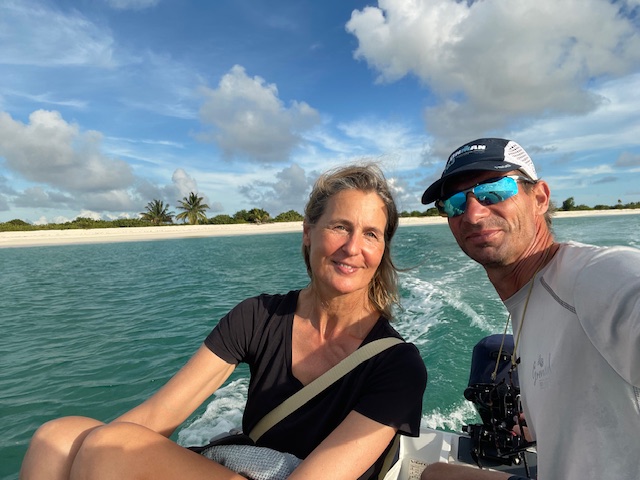
It is upon arriving here that we manage to provide our own little moment of excitement. We’ve towed the dinghy instead of hoisting it onto the davits — and then, busy with anchoring, simply forget about it. As I reverse to set the anchor, the towing line gets caught, wraps itself around the prop, stalling the engine and nearly dragging the dinghy under our stern.
A quick cut of the line, a short dive with a knife, and the problem is solved. Rookie mistake, mild embarrassment, no real damage. We shake our heads, laugh it off, and carry on — a good reminder that the sea never gets tired of keeping you honest.
I take the dinghy to Codrington to clear out and meet Solomon, a local guide. He soon picks us up and takes us into the lagoon to visit a frigate bird colony.
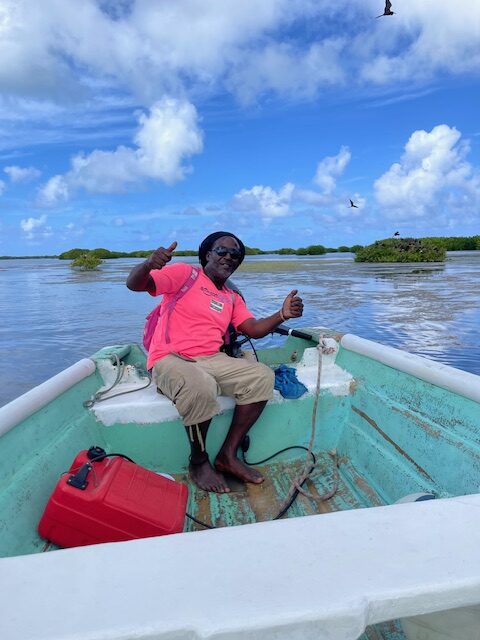
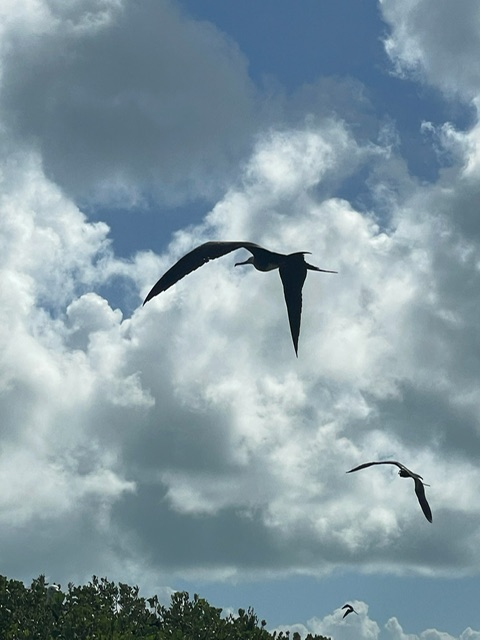
It’s breeding season. Some twenty thousand birds nest on the mangrove islands. The males now display their bright red throat pouches, trying to impress the females.
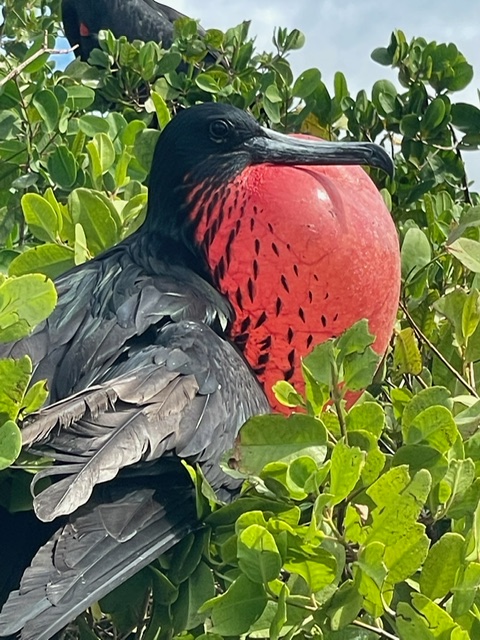
Solomon explains that Irma didn’t affect them — it came outside the breeding season. The birds simply took off and flew above the hurricane until it passed. It’s mesmerizing.
We love it here. It’s new moon, the night sky exploding with stars and a clearly visible Milky Way. Shooting stars streak overhead. And then we discover that we’ve anchored in intensely bioluminescent water. We strip and slip into the sea for a night swim — stars above us, stars swirling around us with every movement. Pure magic.
After five extraordinary days it’s time to leave Barbuda behind. Tomorrow will be our longest sail yet, and we decide to depart at 4 a.m.
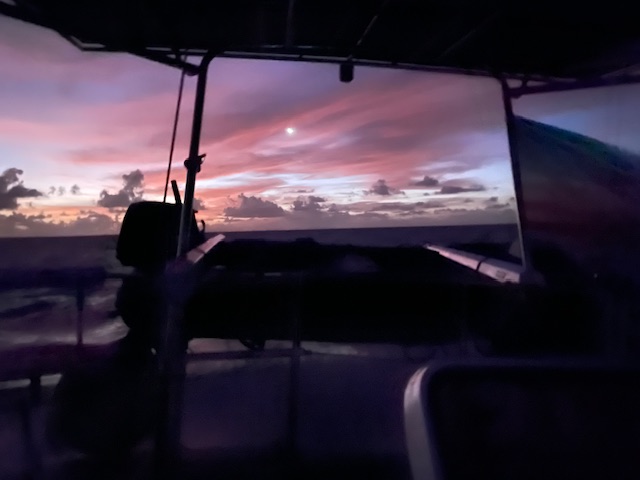
It promises to be an exciting one.
Stay tuned.