JACE is bound for the Mediterranean next year.
It is a big project that has occupied my thoughts off and on for months, and I’m very excited about it. If you missed the last post, take a look for the story behind that decision.
In that post I somewhat casually mentioned the small matter of getting her there.
Well.
It turns out sailing a 49-foot boat from the Caribbean to the Mediterranean across the North Atlantic is a full-on adventure in its own right.
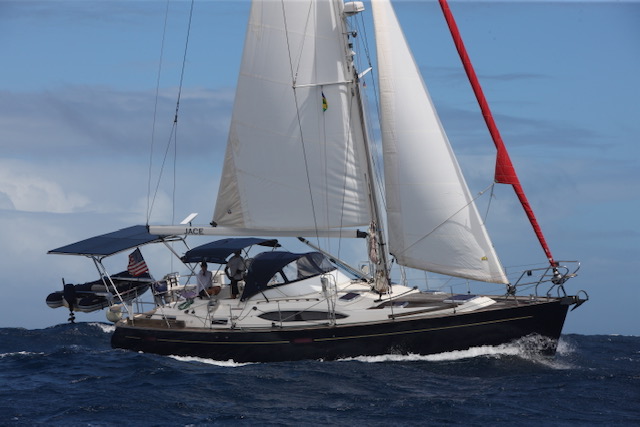
And planning an Atlantic crossing is quite a project.
Routing, schedule, weather, crew, logistics, provisioning, safety, boat readiness, documentation, insurance, customs — the list goes on.
Little by little I work through it. I consult my books on world cruising routes and read about other sailors’ experiences. I study weather patterns, compare routes and timings. And I reconcile all of that with work constraints and travel logistics.
It is a lot. But slowly, a plan emerges.
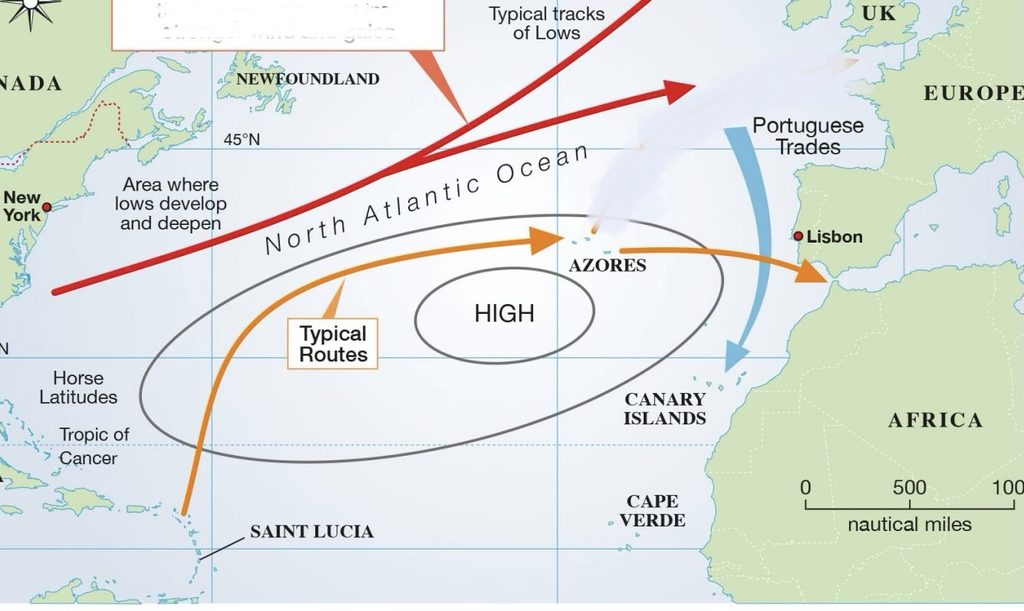
There are initially two variants. One increasingly makes more sense than the other. So that is the one I’m working with now.
It will be a three-leg journey.
Crossing the Atlantic from west to east is quite different from the classic east-to-west trade-wind run from the Canaries to the Caribbean. Heading east means working with the much more variable weather systems of the North Atlantic.
Thankfully, Bermuda and the Azores are very conveniently placed along the way. They break the crossing into manageable passages and offer places to rest, refuel, make repairs, and wait for the next favorable weather window.
I’m also considering joining ARC Europe for the crossing. It is an organized west-to-east rally following essentially this route, combining some added security — pre-departure briefings, weather support and other boats making the same passage — with a strong social side: organized events in the stopover ports and the camaraderie of crossing alongside other crews. For a first Atlantic crossing as skipper, both aspects have their appeal.
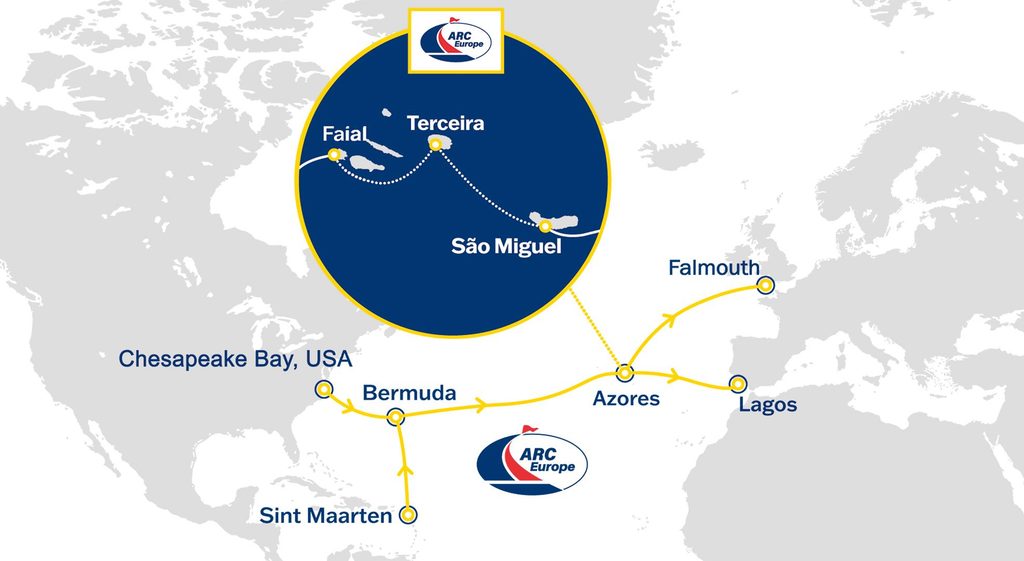
Leg 1: Sint Maarten → Bermuda
The warm-up.
This will be a great introduction to passage sailing and night watches: starting in warm Caribbean waters, likely with plenty of reaching and downwind sailing, before conditions become lighter and more variable approaching Bermuda.
At around 870 nautical miles, I expect roughly five to seven days at sea, starting in early May.
Leg 2: Bermuda → Azores
This is the real ocean passage.
We leave the warmth behind and head into the North Atlantic: cooler temperatures, greyer skies, potentially some rain, fresh westerlies and perhaps a proper blow along the way. And then there is the Azores High, which can just as easily leave us hunting for wind and burning diesel.
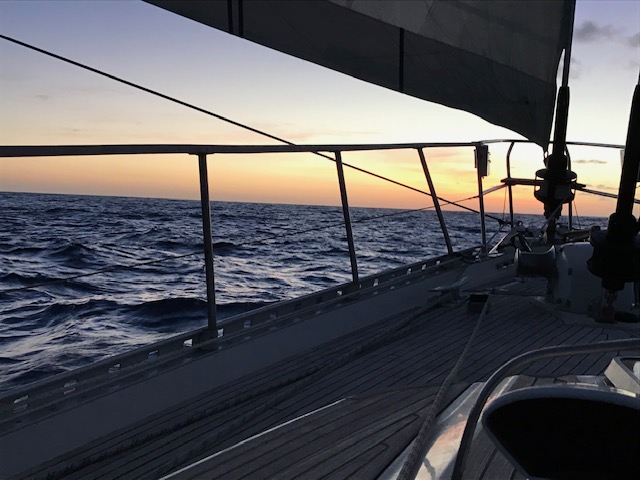
This leg serves as a true rite of passage for sailors. And it will be new territory for me as the skipper, too. Life offshore: watches around the clock, meals underway, sleep whenever you can get it, reacting to weather changes and—day after day with nothing around us but ocean. Sunrises and sunsets, stars without another light for hundreds of miles, dolphins if we’re lucky, and that wonderful rhythm of sailing.
Roughly two weeks at sea, give or take, departing Bermuda around second half of May.
Leg 3: Azores → Lagos, Portugal
The grand finale.
After some time to recover and hopefully explore a little of the Azores, we head east again. The passage should start in the lighter and more variable conditions around the islands before eventually picking up the brisk northerly winds off Portugal.
About another week at sea, with landfall in Lagos on the Algarve sometime around mid-June.
And suddenly JACE will be in Europe.
From there she’ll make her way more slowly along the Iberian coast, through the Strait of Gibraltar and eventually into the Mediterranean.
But that is another project — and another post.
For now I want to focus on the most important part of the plan: You!
Calling all intrepid sailors.
JACE will sail with skipper plus three crew on these passages.
And if the last passage down to Grenada taught me anything, it is that the right people aboard will be a huge part of what makes this experience special.
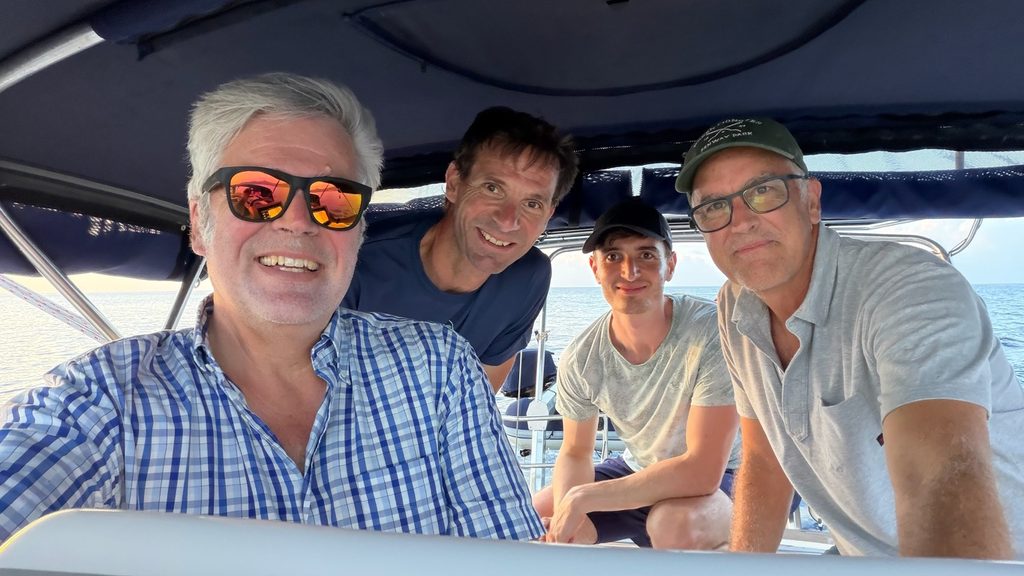
I want people whom I know and trust, who know how to sail and are comfortable living on a sailboat. People who are fun and good company even when tired or stressed. And people who are excited rather than intimidated by the idea of days and nights offshore.
You don’t necessarily need previous ocean-crossing experience. But you should have done coastal sailing, be comfortable taking responsibility aboard, and genuinely want the experience that comes with passage making — including the tired and uncomfortable parts.
There are several ways to join:
Leg 1 — Sint Maarten to Bermuda
5–7 days sailing / roughly 2-week commitment
May 3–5 to May 16–18
Leg 2 — Bermuda to Azores
12–16 days sailing / roughly 4-week commitment
May 14–16 to June 3–12
Leg 3 — Azores to Portugal
6–8 days sailing / roughly 2-week commitment
June 6–8 to June 19–21
And of course combinations are possible:
Legs 1 + 2: roughly 17–23 days sailing / 6-week commitment
Legs 2 + 3: roughly 18–24 days sailing / 6-week commitment
All three: roughly 23–31 days sailing / 8-week commitment
You will notice that those windows are wider than the sailing days. That is intentional. Offshore sailing isn’t predictable. Weather decides when we leave, and sometimes when we arrive.
So if this piques your interest, if passage sailing is something you’ve done before — or something that has long been on your bucket list — reach out to me. Crossing an ocean under sail is one of those things most sailors dream about and relatively few actually get to do.
Maybe this is your chance. Our chance to do it together.
It might seem a long way off now. But a lot of the planning and logistics depend on the crew. We therefore need to start putting the team together soon. Experience matters, but so does availability, attitude, and simply being a good fit aboard.
The lines are now on the chart, dates are appearing in the calendar, and I’m starting to imagine the people who might be standing watch beside me at three in the morning somewhere in the middle of the North Atlantic.
The Mediterranean suddenly feels a little closer.
I am so excited Andy for you and JACE. This was the exact route I wanted to take JACE back to where she started. If I weren’t still sailing across the Pacific, I would be honored to join you. I can’t wait to follow along in your journey.